New discoveries unearthed during the excavations at the Ancient City of Carchemish in Gaziantep will be presented to visitors at the Museum of Anatolian Civilizations in Ankara between February 2 and March 26, 2026, as part of the exhibition titled “The Hittites’ Carchemish on the Banks of the Euphrates: New Discoveries and New Contributions.”
A total of 57 artifacts from the Ancient City of Carchemish will be displayed to the public for the first time. Dating from 1300 to 700 BC, when Hittite culture flourished, these artifacts offer remarkable insights into the artistic achievements, belief systems, and political organization of the period.
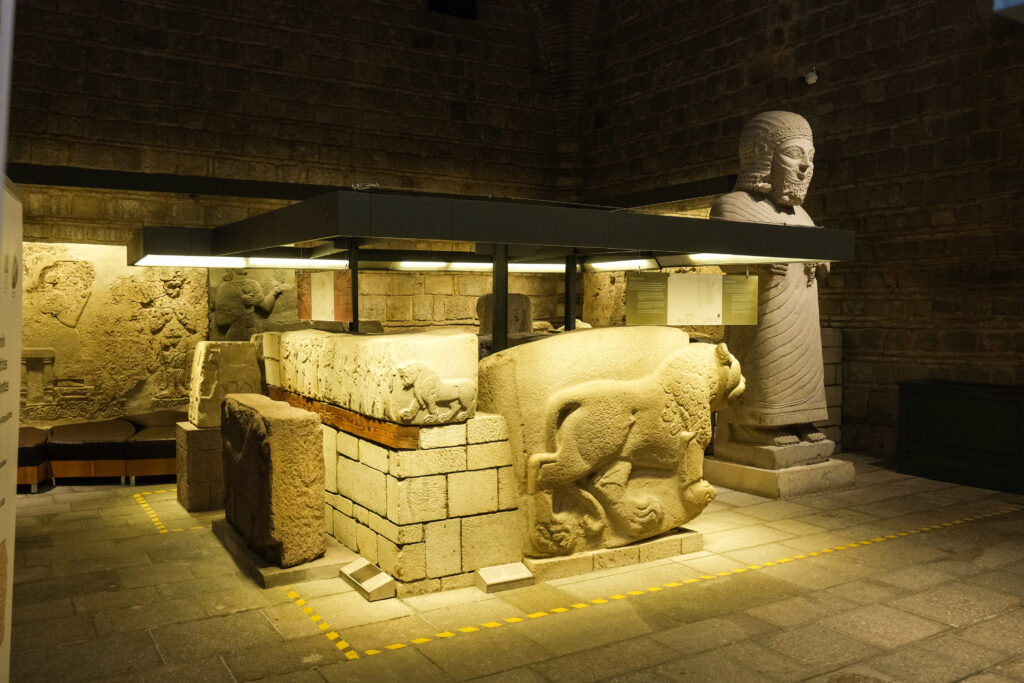
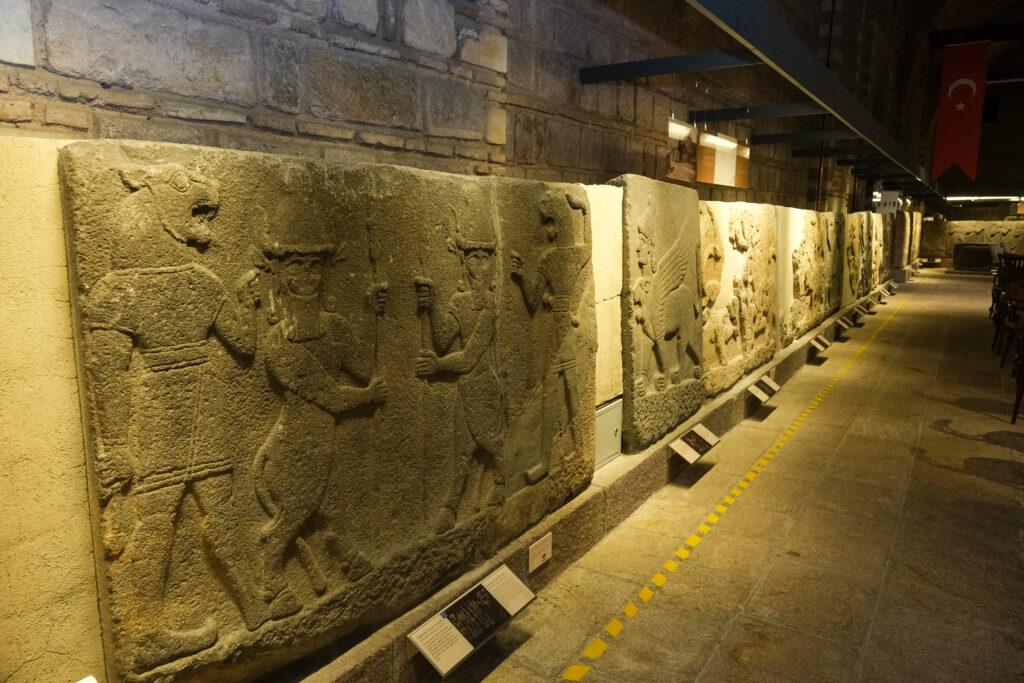
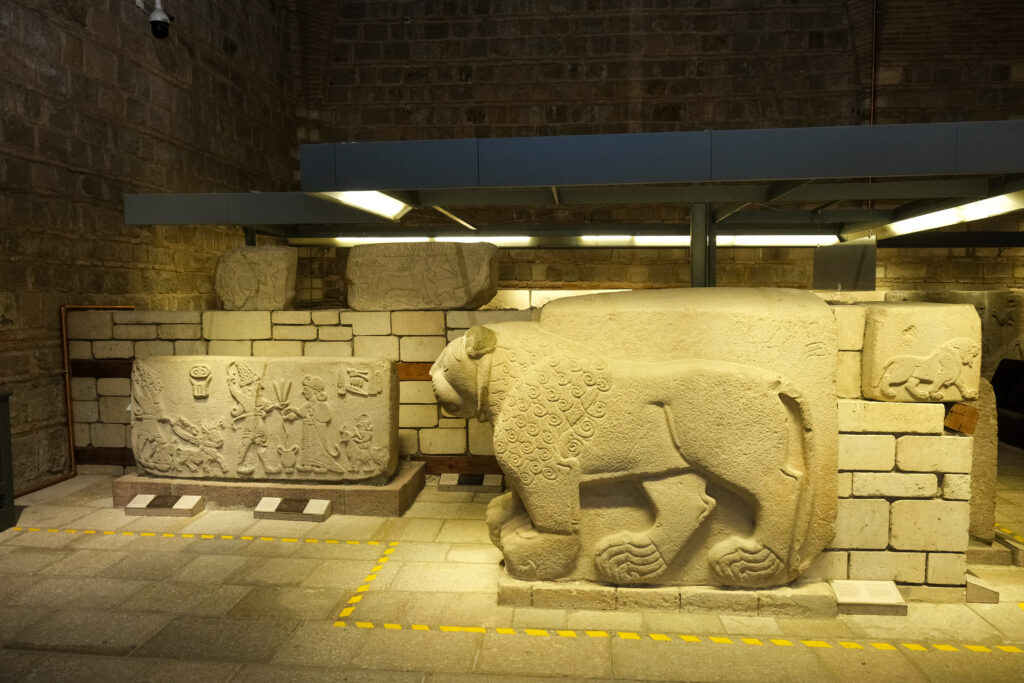
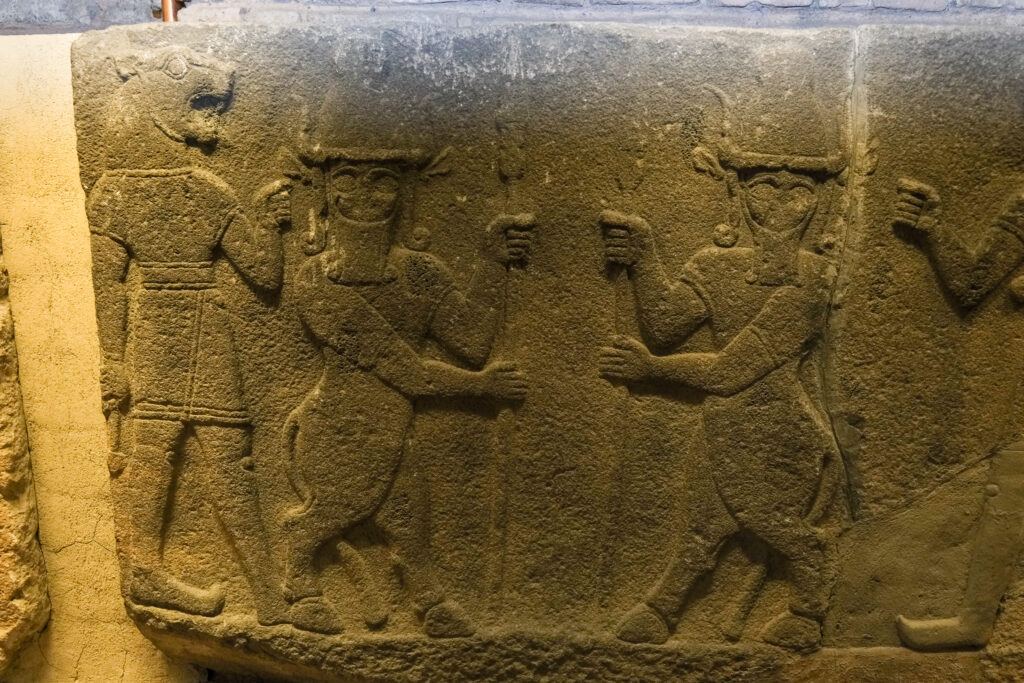
The exhibition highlights Carchemish’s central role within the Hittite world through an outstanding collection of seals, reliefs, inscriptions, and architectural elements. Among the highlights are orthostats decorated with battle scenes and royal figures, reflecting both the artistic excellence and political structure of the Hittite civilization while providing invaluable visual and written evidence of the period.
The artifacts unearthed at the Ancient City of Carchemish, where SANKO Holding has served as the official excavation sponsor since 2015, are now on display at the Museum of Anatolian Civilizations. As part of the exhibition, nine orthostats, whose conservation was completed with the support of SANKO Holding, are being exhibited to the public for the first time.
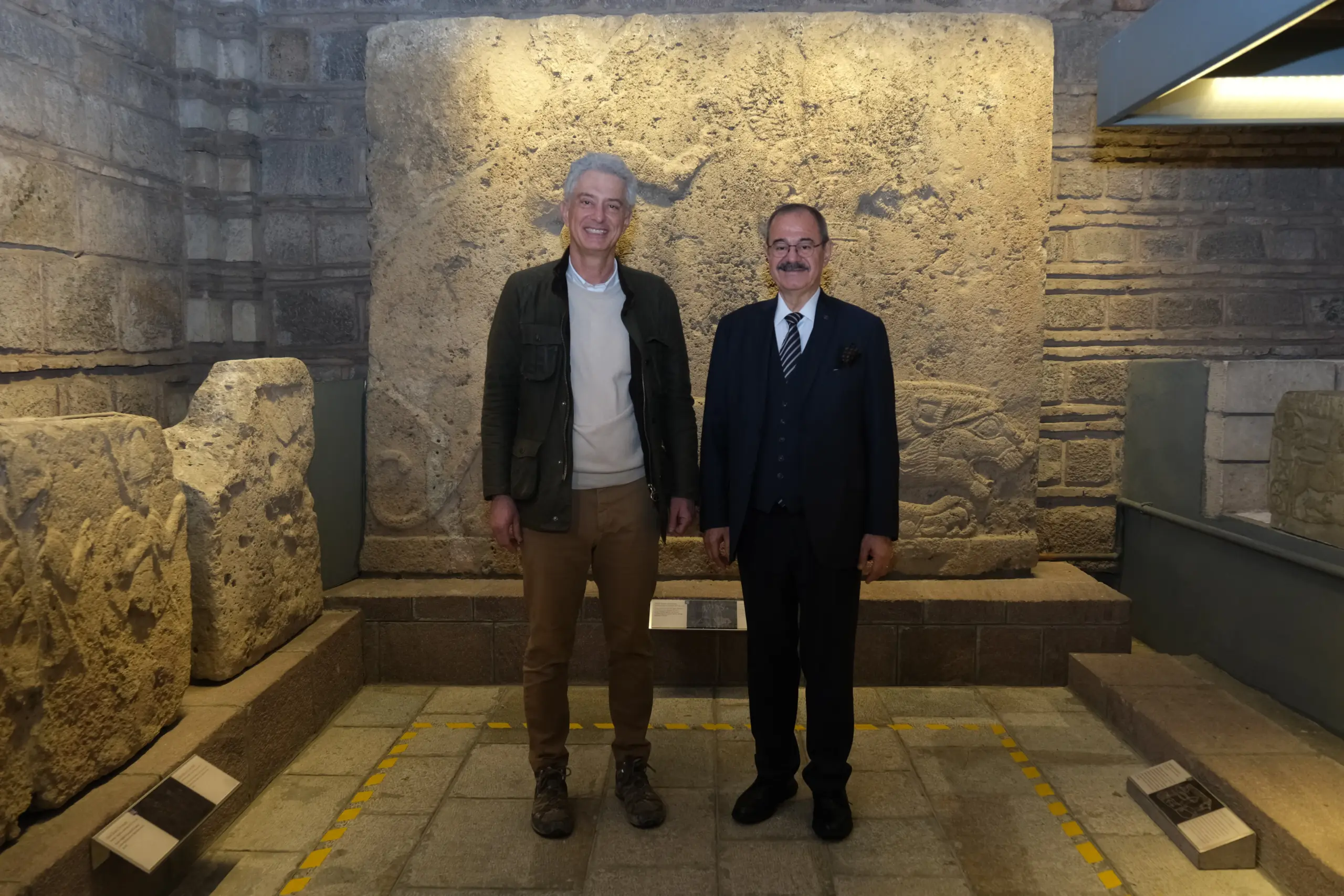
Seven of these orthostats, now among the museum’s most significant permanent exhibits, consist of fragments discovered during the British excavations conducted between 1911 and 1914. Their missing sections were uncovered during the joint Turkish–Italian excavations launched in 2011. Nearly a century after their separation, these fragments have been reunited at the Museum of Anatolian Civilizations through the support of SANKO Holding, where their conservation and restoration were successfully completed.
Additionally, several artifacts have been displayed according to their original locations within the excavation area under the scientific supervision of the Head of Excavation, Prof. Dr. Nicolò Marchetti.
The 57 artifacts featured in the temporary exhibition were carefully transported from museums in Istanbul, Ankara, and Gaziantep to the Museum of Anatolian Civilizations. While the artifacts from Istanbul and Ankara originate from the early British excavations at Carchemish, those transferred from the Gaziantep Museum were selected from discoveries made during the ongoing Turkish–Italian excavations.
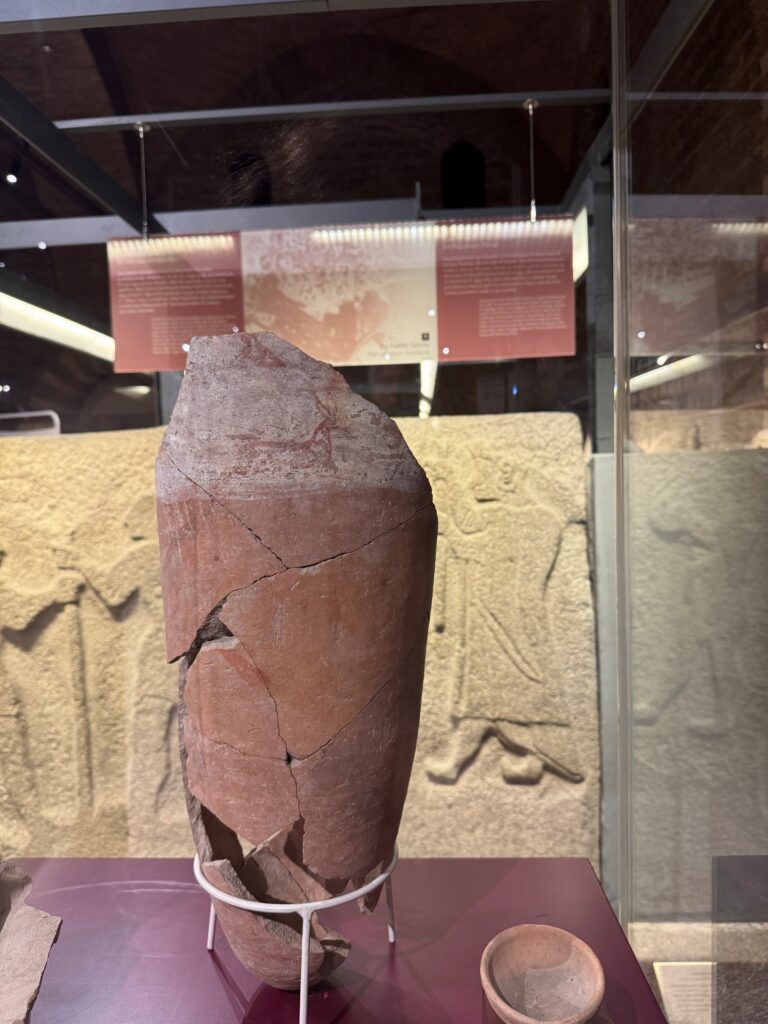
The first exchange of artifacts between the Gaziantep and Ankara museums took place in 2021, with 17 artifacts transferred to Ankara and 36 artifacts sent to Gaziantep.
Conducted under the auspices of the Ministry of Culture and Tourism of the Republic of Türkiye, in cooperation with the Gaziantep Governor’s Office, Gaziantep Metropolitan Municipality, Istanbul University, Gaziantep University, and the University of Bologna, the excavations at the Ancient City of Carchemish are carried out by an international team of Turkish and Italian researchers. Through its long-term support for this multi-stakeholder scientific initiative, SANKO Holding continues to make significant contributions to the preservation of Carchemish and to the advancement of archaeological research.
“Protecting the Past Is Our Responsibility to the Future”
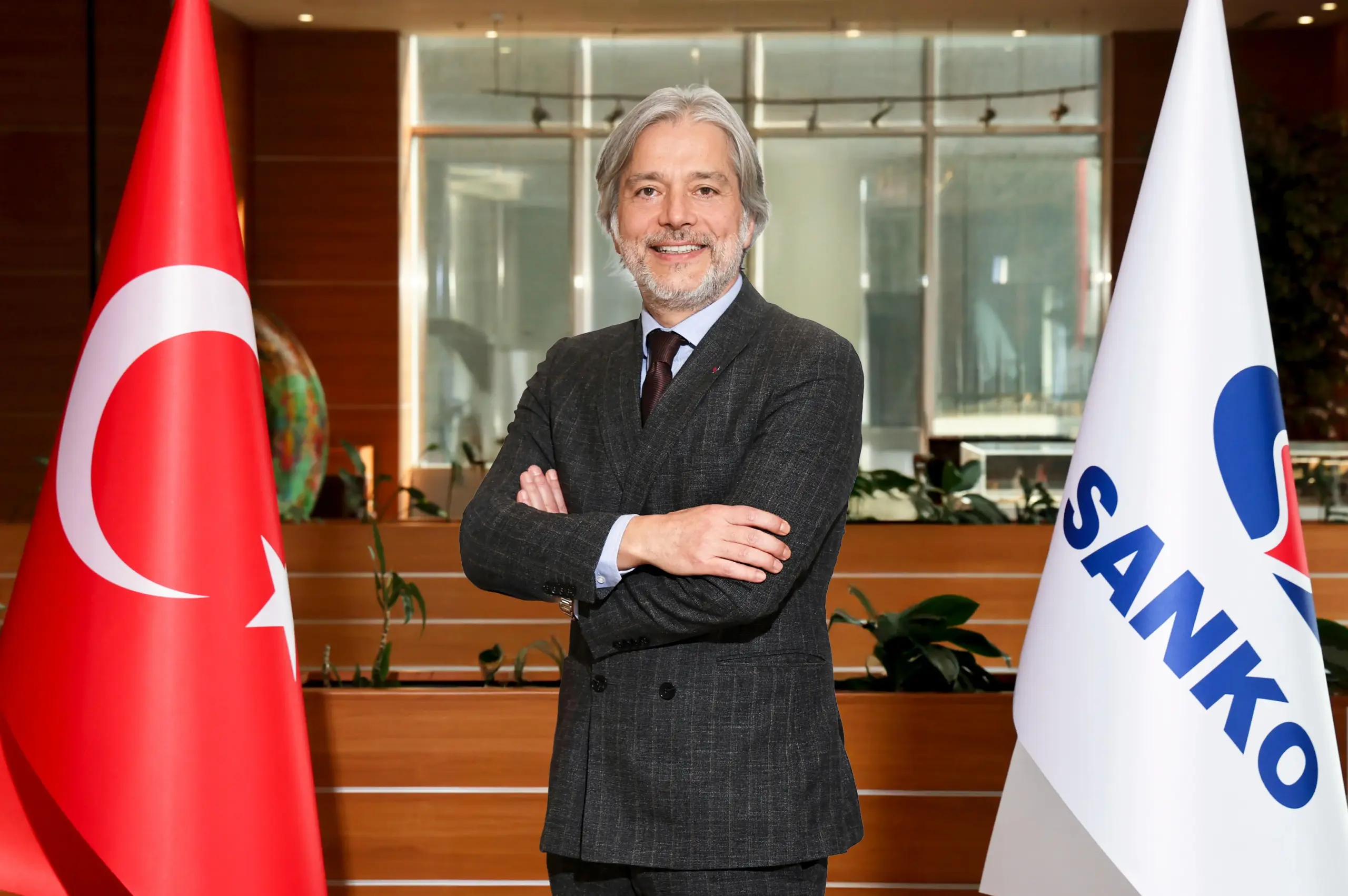
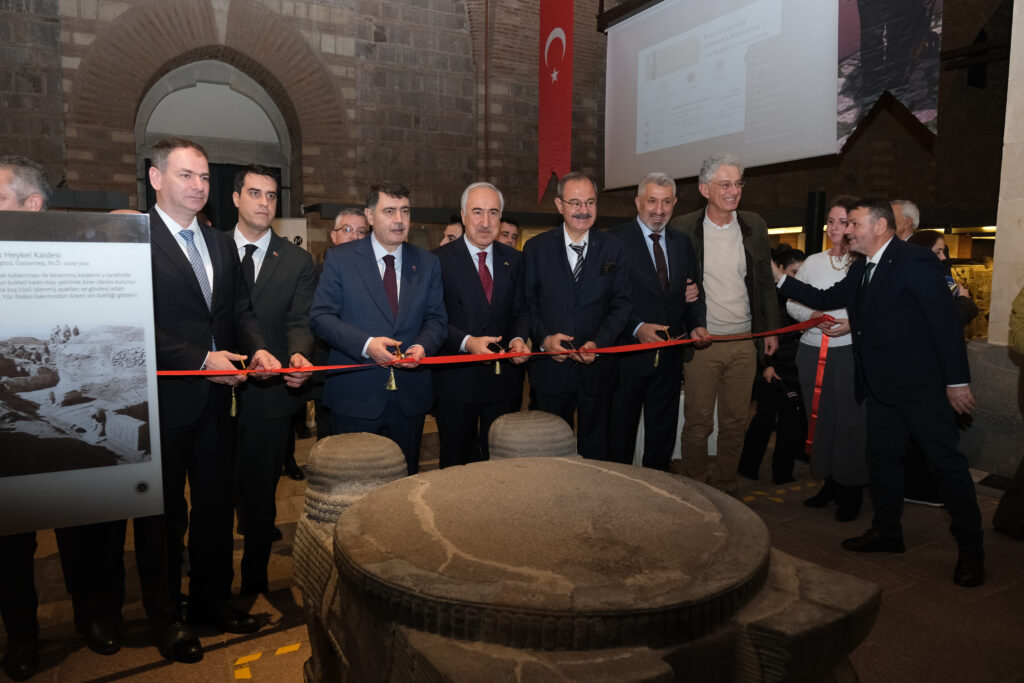
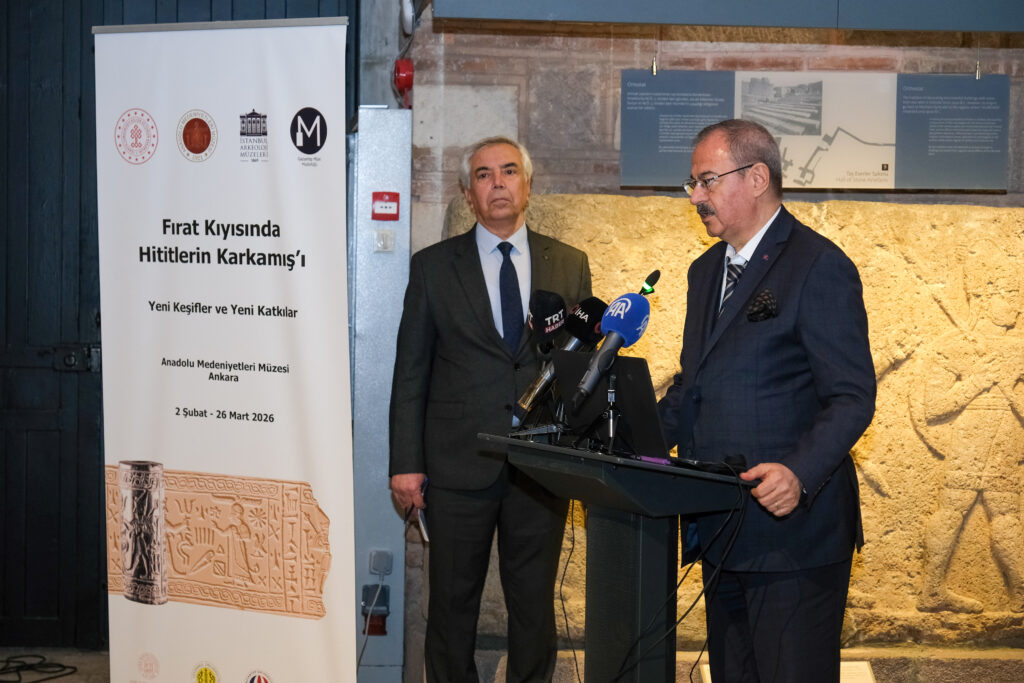
Speaking at the exhibition’s opening ceremony, SANKO Holding Chairman Adil Sani Konukoğlu emphasized that, throughout its more than 120-year history, SANKO has played a pioneering role not only in industry but also in the preservation of cultural heritage.
“Anatolia is a unique geography where civilizations were born, cultures converged, and some of humanity’s most remarkable chapters were written. We are delighted to bring the extraordinary heritage of the Ancient City of Carchemish, which has left profound traces on these lands for more than six thousand years, to our capital, Ankara, through this exhibition.
Throughout our 120-year corporate history, deeply rooted in this region, SANKO Holding has carried out its industrial and production activities with a strong sense of responsibility toward society. For us, preserving cultural heritage is just as essential as economic development and represents a cornerstone of a sustainable future.
Guided by the principle passed down by our founders—‘Those who do not protect their past have no future’—we regard safeguarding the values entrusted to us by these lands not only as a corporate responsibility but also as a duty to our country.
With this understanding, we have proudly supported the archaeological excavations at Carchemish, one of the world’s most significant historical crossroads, conducted under the auspices of the Ministry of Culture and Tourism by the joint Turkish–Italian excavation team since 2015.
Beyond our financial support, we have also contributed through our engineering expertise. The Lower Palace Protective Roof Project, implemented by our group company Poligon Construction and inaugurated in 2024, has been recognized within the international archaeological community for its innovative design and stands as a tangible reflection of SANKO Holding’s commitment to safeguarding cultural heritage.
This exhibition at the Museum of Anatolian Civilizations brings to light a legacy that remained hidden beneath the earth for thousands of years and shares it with the world. Every restored sculpture and every artifact on display tells the story of the people who once lived, created, and shaped life on these lands.
On this cultural journey extending from Zeugma to Carchemish, I would like to express my sincere gratitude, on behalf of myself and the SANKO Group, to our Turkish and Italian Heads of Excavation, Prof. Dr. Nicolò Marchetti and Prof. Dr. Hasan Peker, to our dedicated archaeological teams, to the esteemed representatives of our Ministry, and to everyone who contributed to making this remarkable exhibition possible.”
Prof. Dr. Nicolò Marchetti, Head of the Carchemish Excavation from the University of Bologna, described Carchemish as an exceptional cultural treasure and stated:
“When we launched the Carchemish Project in 2011, it was never simply an archaeological excavation; it was also a vision of building bridges between peoples. Following the collapse of the Hittite Empire, Carchemish emerged as the region’s leading political and cultural center. The seals and figures presented in this exhibition provide valuable insights into the trade networks, belief systems, and artistic achievements of that era.
Preserving this shared heritage and passing it on to future generations is our greatest responsibility. In this context, I would like to thank all stakeholders who contributed to this project, especially SANKO Holding, whose support enabled the conservation of nine orthostats and their presentation to visitors today.”
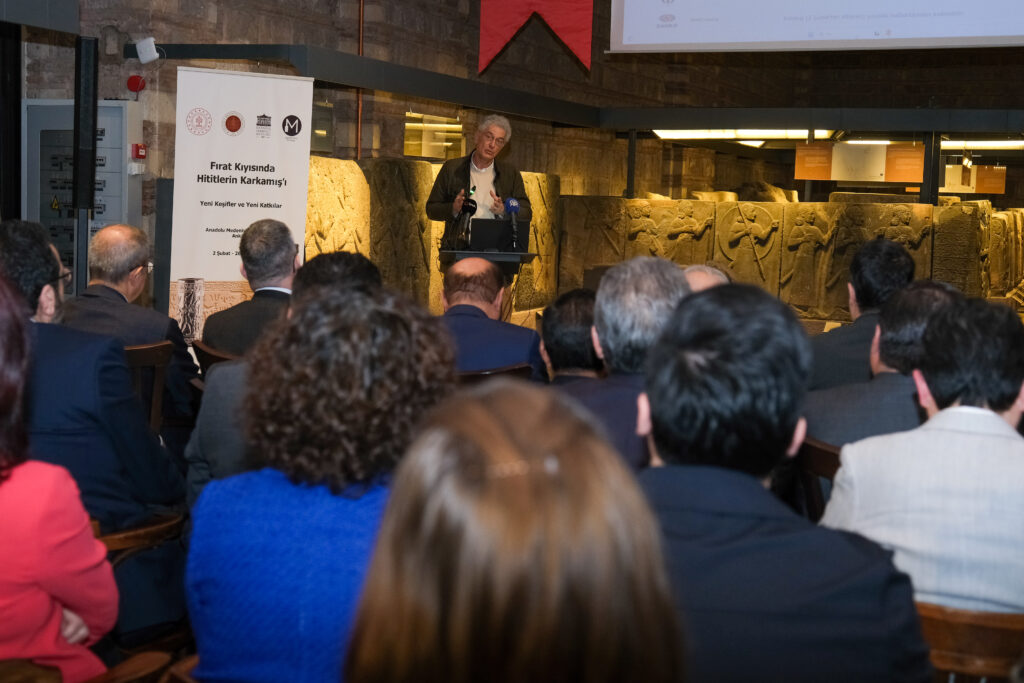
Erhan Karakaya, Provincial Director of Culture and Tourism of Ankara, emphasized the universal significance of Carchemish for Anatolia, Mesopotamia, and the Eastern Mediterranean. He noted that the exhibition, featuring artifacts that shed light on the Iron Age, represents an outstanding example of scientific continuity and international academic cooperation following the resumption of excavations in 2011, nearly a century after they had ceased.
Open to Visitors Until March 26
The exhibition “The Hittites’ Carchemish on the Banks of the Euphrates: New Discoveries and New Contributions” will remain open to visitors at the Museum of Anatolian Civilizations in Ankara until March 26, 2026.
Visitors can explore the exhibition every day of the week between 08:30 and 17:30.
The exhibition catalog is available via the link provided.